The Quiet-Day Problem Every Restaurant Knows
Every restaurant has dead hours. The Tuesday 2–5 PM stretch. The Monday dinner service. The Wednesday afternoon lull. These are not demand problems — people are still eating — they are visibility problems. Your past customers are not thinking about you at 3 PM on a Tuesday because nothing reminded them to. A quiet-day offer solves that by showing up at the exact moment of the lull.
Four Practical Quiet-Day Offer Examples
The most effective quiet-day offers are specific to the day, the time window, and the audience. Generic '10% off' fails because it is not urgent. Time-bounded, named offers work because they create a reason to act now.
Monday: Pizza Promotion
'Monday Margherita Madness — free garlic bread with any large pizza, 5–9 PM only.' Monday is the weakest dinner night; pairing a low-cost add-on with a specific window drives family orders.
Tuesday: Lunch Offer
'Tuesday Lunch Club — 20% off all lunches, 11 AM–2 PM.' The 11–2 window targets office workers deciding where to eat; 20% is enough to shift the decision without eroding dinner margin.
Wednesday: Café Special
'Wednesday Matcha Hour — double loyalty points on any matcha drink, 2–4 PM.' The 2–4 PM dead zone is ideal for a low-cost loyalty multiplier that rewards the afternoon regulars.
Thursday: Family Dining Incentive
'Thursday Family Night — kids eat free with any adult main, 5–8 PM.' Thursday primes the weekend early; a family-focused offer builds the habit before Friday competition peaks.
How AI Helps Write Offers (and How It Does Not)
AI can assist by drafting offer copy — generating headline variations, writing the notification text, suggesting time windows based on historical patterns. What AI does not do is send the offer. In a responsible setup, the AI drafts, the owner reviews, and only the owner approves the send. This human-in-the-loop design protects the brand voice and prevents automated errors.
How Eligible Customers Receive Offers
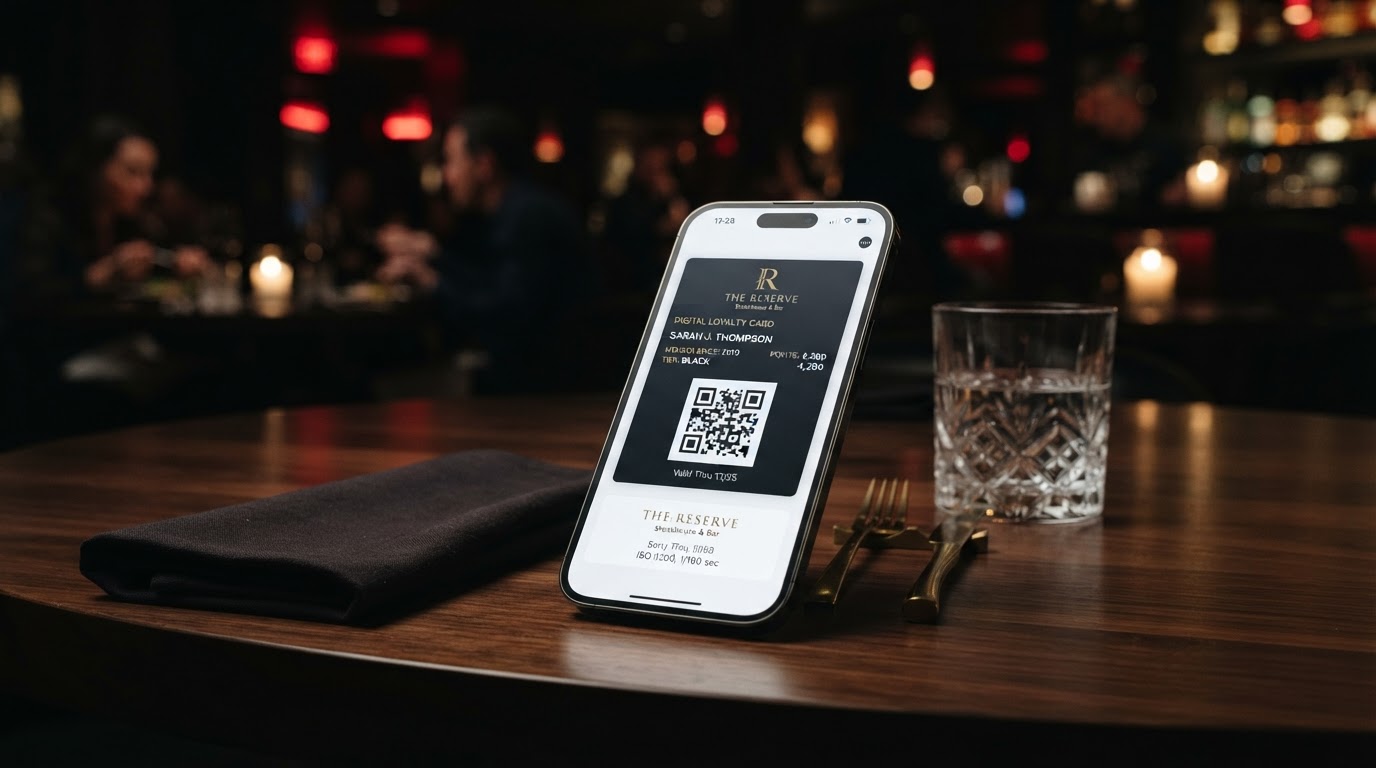
Once the owner approves an offer, it is delivered to eligible loyalty members through supported channels. On a digital wallet system, that may be a lock-screen notification to members with a saved pass. Where SMS is configured, it may be a text message. The delivery mechanism depends on the channels the venue has verified and connected.
AI Offer Assistant — Coming Soon. Fully automated AI campaign generation is a planned capability. Today, AI assists with offer drafting; the owner approves and schedules every send.
Separating Current Features From Planned Automation
It is important to be clear about what exists today versus what is planned. Current capability: AI-assisted offer writing, owner approval, scheduling, and delivery through supported channels. Planned capability: AI Offer Assistant that can generate and schedule campaigns with lighter owner oversight. Do not represent planned automation as live.